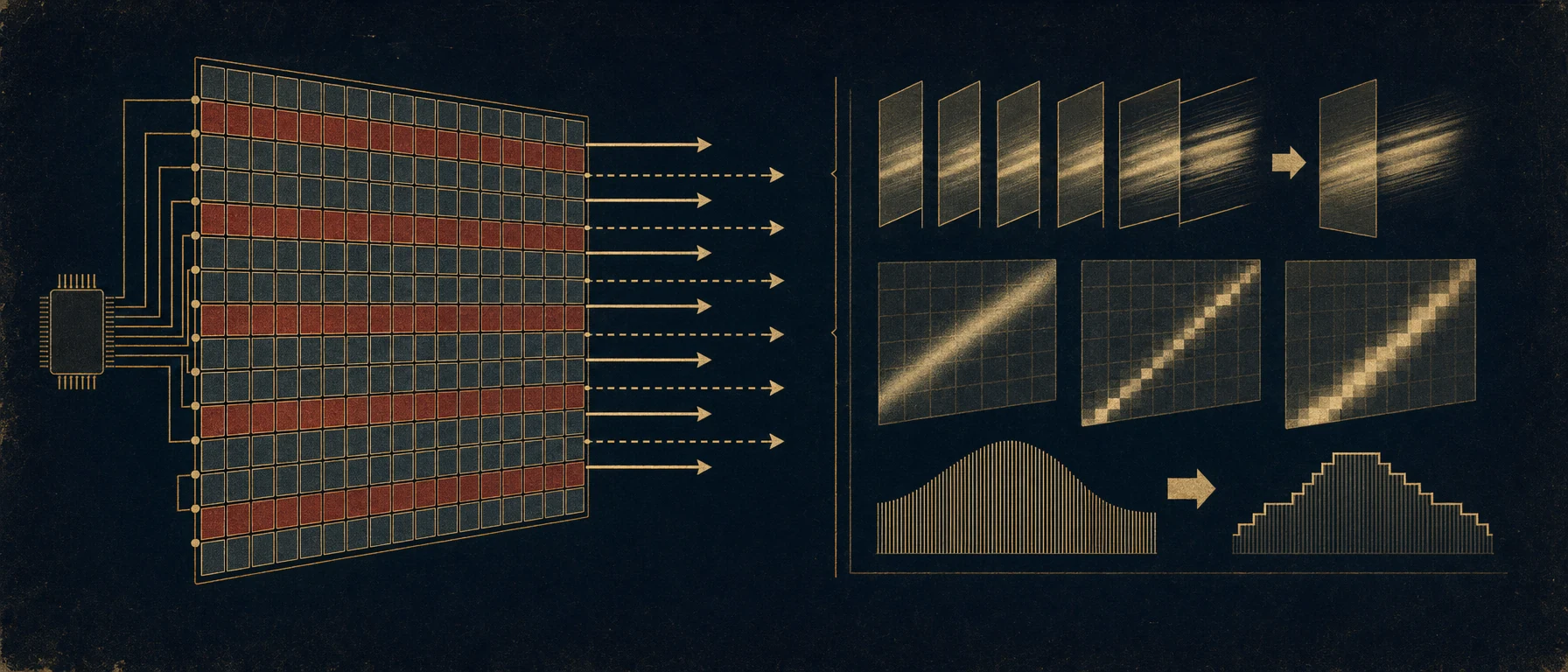
A camera sensor readout technique that skips rows of pixels during capture to enable faster data throughput, higher frame rates, or smaller file sizes – results in reduced resolution and potential aliasing/moiré artifacts compared to full sensor readout or pixel binning approaches.
What is Line Skipping?
Line Skipping is a sensor readout technique where pixel rows are skipped during capture. This allows for faster data rates and higher frame rates, but negatively impacts image quality due to reduced resolution and aliasing.
Basic Principle
| Aspect | Description |
|---|---|
| Method | Skipping rows |
| Purpose | Faster readout |
| Trade-off | Quality loss |
| Alternative | Binning, Oversampling |
Why Line Skipping?
| Reason | Description |
|---|---|
| Data Volume | Less data |
| Frame Rate | Higher FPS possible |
| Processing | Lower load |
| Cost | Cheaper hardware |
How it Works
| Step | Description |
|---|---|
| Sensor | All pixels exposed |
| Readout | Every 2nd/3rd row |
| Result | Less data |
| Output | Reduced resolution |
Skipping Patterns
| Type | Description |
|---|---|
| 2x Skip | Every 2nd row |
| 3x Skip | Every 3rd row |
| 4x Skip | Every 4th row |
| Variable | Per mode |
Disadvantages
| Problem | Description |
|---|---|
| Resolution | Reduced |
| Aliasing | Jaggies |
| Moiré | Pattern interference |
| Detail | Loss |
Aliasing Explained
| Aspect | Description |
|---|---|
| Cause | Undersampling |
| Appearance | Stair-stepping on edges |
| Occurs with | Fine structures |
| Avoidance | Oversampling |
Moiré Explained
| Aspect | Description |
|---|---|
| Cause | Pattern interference |
| Appearance | Rainbow effects |
| Typical on | Fabrics, grids |
| Problematic | For post-production |
Alternatives
| Method | Description |
|---|---|
| Pixel Binning | Combining pixels |
| Oversampling | Full readout, downsample |
| Full Readout | Using all pixels |
| Cropped Sensor | Smaller area |
Pixel Binning vs. Skipping
| Aspect | Binning | Skipping |
|---|---|---|
| Method | Combining | Skipping |
| Aliasing | Less | More |
| Sensitivity | Increased | Same |
| Quality | Better | Worse |
Oversampling Explained
| Aspect | Description |
|---|---|
| Method | Read full resolution |
| Then | Downscale |
| Result | Better quality |
| Disadvantage | More processing |
Cameras and Line Skipping
| Camera Type | Typical Behavior |
|---|---|
| DSLR Video | Often Line Skipping |
| Cinema Camera | Mostly Oversampling |
| Mirrorless | Varies |
| Professional | Full Readout |
Historical Context
| Era | Situation |
|---|---|
| Early DSLRs | Line Skipping Standard |
| Today | Better processing |
| Cinema | Mostly without skipping |
| Trend | Oversampling |
Detection
| Characteristic | Indicator |
|---|---|
| Moiré | On fabrics/grids |
| Aliasing | On diagonal lines |
| Softness | Unexpected lack of sharpness |
| Specs | Manufacturer specifications |
Camera Settings
| Mode | Often with Skipping |
|---|---|
| Cropped 4K | Less likely |
| Full Sensor 4K | Possible |
| 1080p | Varies |
| High FPS | Often Skipping |
Impact on Post-Production
| Aspect | Consequence |
|---|---|
| Moiré | Difficult to remove |
| Upscaling | Limited |
| VFX | Less detail |
| Color | Artifacts possible |
Avoidance Strategies
| Strategy | Description |
|---|---|
| Camera Choice | Without skipping |
| Mode Selection | Oversampling modes |
| Clothing | Avoid problematic patterns |
| Post-Production | Moiré reduction |
Practical Tips
| Situation | Recommendation |
|---|---|
| Fine Patterns | Avoid |
| Testing | Check fabrics |
| Camera | Know the specs |
| Alternatives | Binning modes |
Quality Comparison
| Method | Quality |
|---|---|
| Full Readout | Best |
| Oversampling | Very good |
| Binning | Good |
| Line Skipping | Acceptable |
Best Practices
| Practice | Reason |
|---|---|
| Know the Specs | Understand the camera |
| Test Modes | Before production |
| Avoid Patterns | Moiré-prone ones |
| Quality First | When possible |
Today
Line skipping was long a necessary evil for video in DSLRs. Modern cameras increasingly offer oversampling and full readout modes that provide better image quality. Understanding this technique helps in camera and mode selection for optimal results.