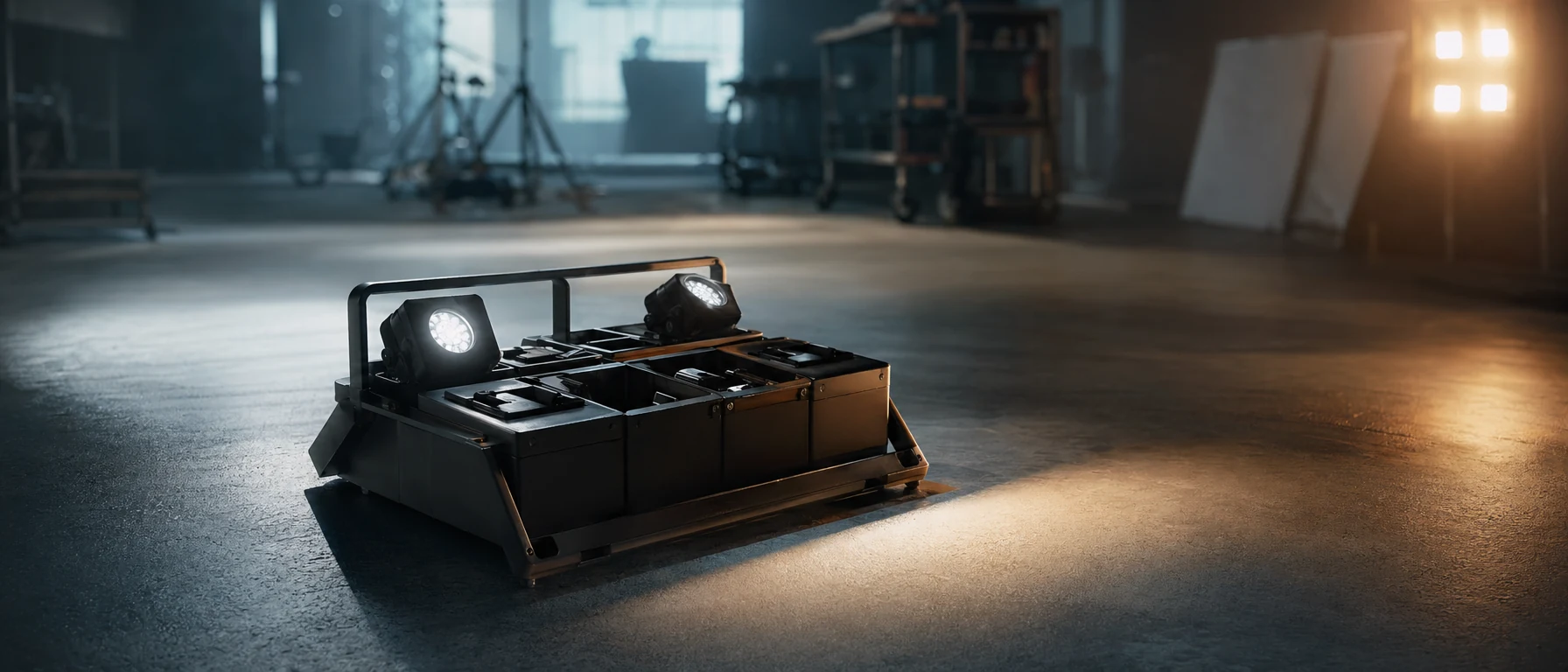
Compact mobile power distribution unit with multiple CEE outlets, used for smaller lighting setups on set.
Technical Details
Modern Lunch Boxes utilize lithium-ion batteries (150-300 Wh capacity) and offer 2-6 hours of continuous illumination. The light heads use interchangeable light sources: LED modules (3200K-5600K, CRI >95) or Tungsten lamps (3200K, 25W/50W/100W). Dimming control is achieved via analog potentiometers or DMX interface. Typical beam angles vary between 20° (spot) and 60° (flood). Professional systems like the Dedolight DLED or Arri Orbiter additionally offer wireless control and color temperature adjustment via apps.
The case system features foam inserts that securely hold each light head, cables, diffusers, and barn doors. External connections allow operation via mains power or V-Mount batteries.
History & Development
In 1987, Dedo Weigert developed the first commercial Lunch Box in response to the growing demand for mobile lighting in documentaries and news productions. The original "DEDO System" used 12V Tungsten lamps with 20W-150W output.
In 2003, Litepanels introduced LED-based versions, drastically reducing heat generation and power consumption. Since 2015, fully digital systems with app control and expanded color spectrums have dominated the market. Modern Lunch Boxes integrate RGBW LEDs and enable effect lighting directly from the case.
Practical Use in Film
Lunch Boxes established themselves as standard for run-and-gun productions, interviews, and car rigs. In "The Social Network" (2010), cinematographer Jeff Cronenweth used Dedolight Lunch Boxes for spontaneous dialogue scenes in cramped Harvard rooms. Documentarians like Errol Morris systematically use them for quick interview setups without external power supply.
The typical workflow includes: unpacking, positioning light heads, connecting the battery – ready for use in under three minutes. Disadvantages: limited light output, short operating time at maximum brightness, restricted modification options compared to studio lights.
Comparison & Alternatives
Lunch Boxes differ from classic location kits through their integrated power supply and compact design. Panel lights (Litepanels, Astra) offer more light output but require external batteries. LED mats are more flexible but less robust for transport.
Modern alternatives include modular systems like Astera Tubes or Quasar Science Q-LED, which offer wireless control and advanced color options. For larger productions, Lunch Boxes are increasingly being replaced by battery-powered HMI systems (ARRI M-Series), which deliver significantly more light output with similar mobility.