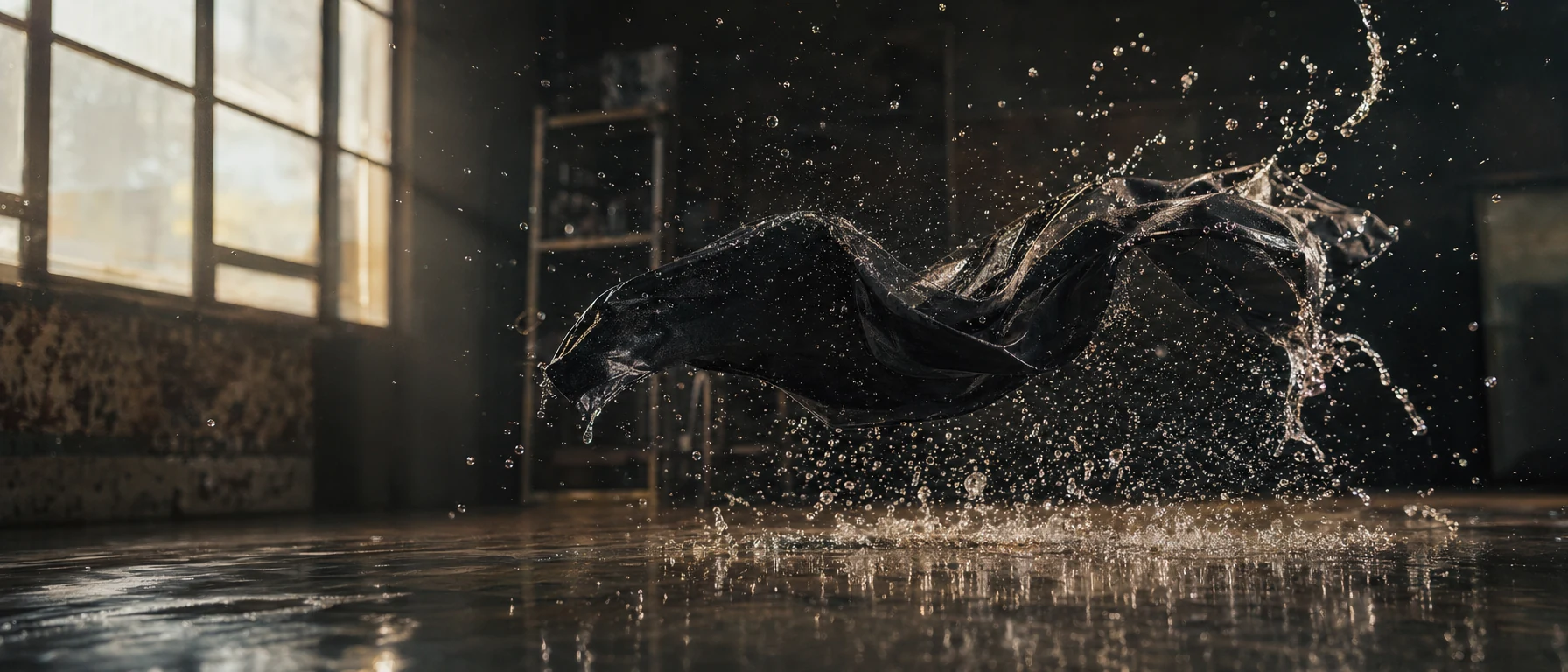
Slow motion is achieved by shooting at a higher frame rate (e.g. 120fps) and playing back at normal speed, making fast movement visible.
Technical Details
Modern digital cameras achieve various slow-motion levels: consumer cameras manage 120-240 fps, professional cinema cameras like the RED V-Raptor 8K up to 600 fps at 4K resolution. Specialized high-speed cameras (Phantom TMX 7510) reach 1.75 million fps at reduced resolution. The slowing down is calculated by the ratio of recording to playback frequency: 120 fps at 24 fps playback result in a 5x slow-down (20% of original speed). High-speed recordings require more intense lighting, as the exposure time per frame is drastically reduced.
History & Development
The first documented slow motion was created by Étienne-Jules Marey in 1882 with his "Chronophotography," which analyzed bird flight. August Musger developed the first practical slow-motion cinematograph with variable recording speed in Graz in 1904. Hollywood established the technique in the 1920s for slapstick comedies and sports studies. The electronics revolution of the 1960s brought precisely controllable motors, and digital sensors in the 2000s finally enabled extreme speeds without film transport issues.
Practical Use in Film
Action films use slow motion for explosions and fight sequences – Zack Snyder established the characteristic switch between normal and slow-motion speed with "300" (2006). Sports films use 250-500 fps for ball movements, horror films 120 fps for blood splatter details. The workflow requires prior calculation of storage capacity: one minute of 1000-fps footage at 4K requires about 500 GB of storage. Disadvantages: increased lighting requirements, limited recording duration, complex data processing.
Comparison & Alternatives
Distinction from digital time stretching, which generates interpolated intermediate frames retrospectively from 24-fps material – qualitatively significantly worse. Speed ramping combines variable speeds within a shot. Modern alternative: AI-based frame interpolation (RIFE, DAIN) generates usable slow motion from normal footage but does not achieve the sharpness of true high-speed recordings. Time lapse is the technical opposite with a reduced recording frequency.